Lichens

ALGAE + FUNGI
ALGAE : -
Phycobiont
chloroplast chlorophyll
synthesis their own food = autotrophs
prepare / provide food for fungi .
Phycobiont
chloroplast chlorophyll
synthesis their own food = autotrophs
prepare / provide food for fungi .
FUNGI :-
mycobiont
Heterotrops
absorptive mode
provide shelter & absorption of water & minerals from soil .
algae + fungi → ( symbiosis relationship )
* mutualism
* pollination indicator - lichens do not grow in polluted area
Prions
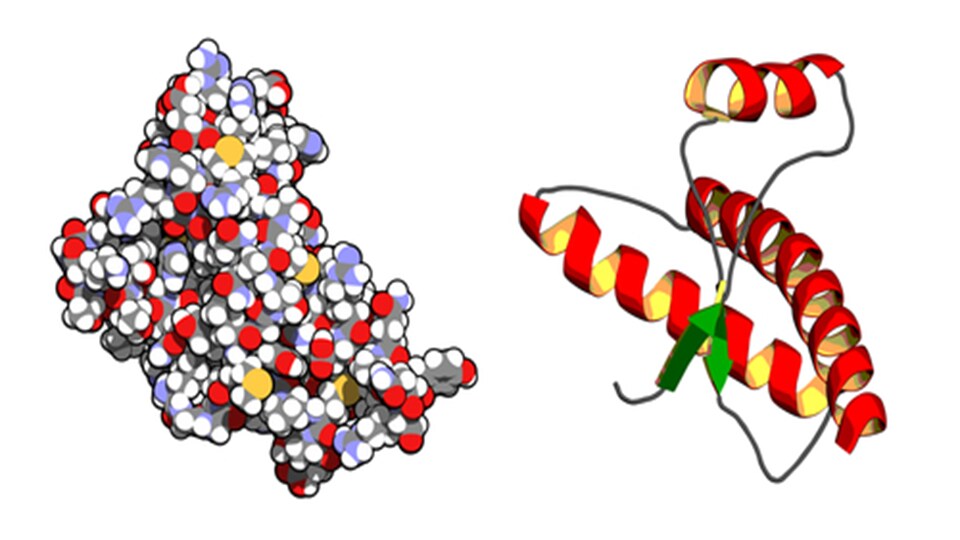
Size = similar to viruses .
infectious proteinaceous agent
Proteinaceous = protein only
Acellular / non-cellular
pathogenic → nerogenic disease causing (Cattle & Human )
nerogenic disease causing :-
Cattels → mad cow disease or BSE = Bovine spongiform encephalopthy
Human Cr JD ( J = jacob ,D = disease )
Viroids
 |
Viroids |
1971 = T.O. Diener
Acellular / non-cellular
Acellular / non-cellular
infection free RNA
infection = pathogenic disease causing → potato spindle tuber disease
RNA = Low molecular wt. ,nucleic acid
Viruses
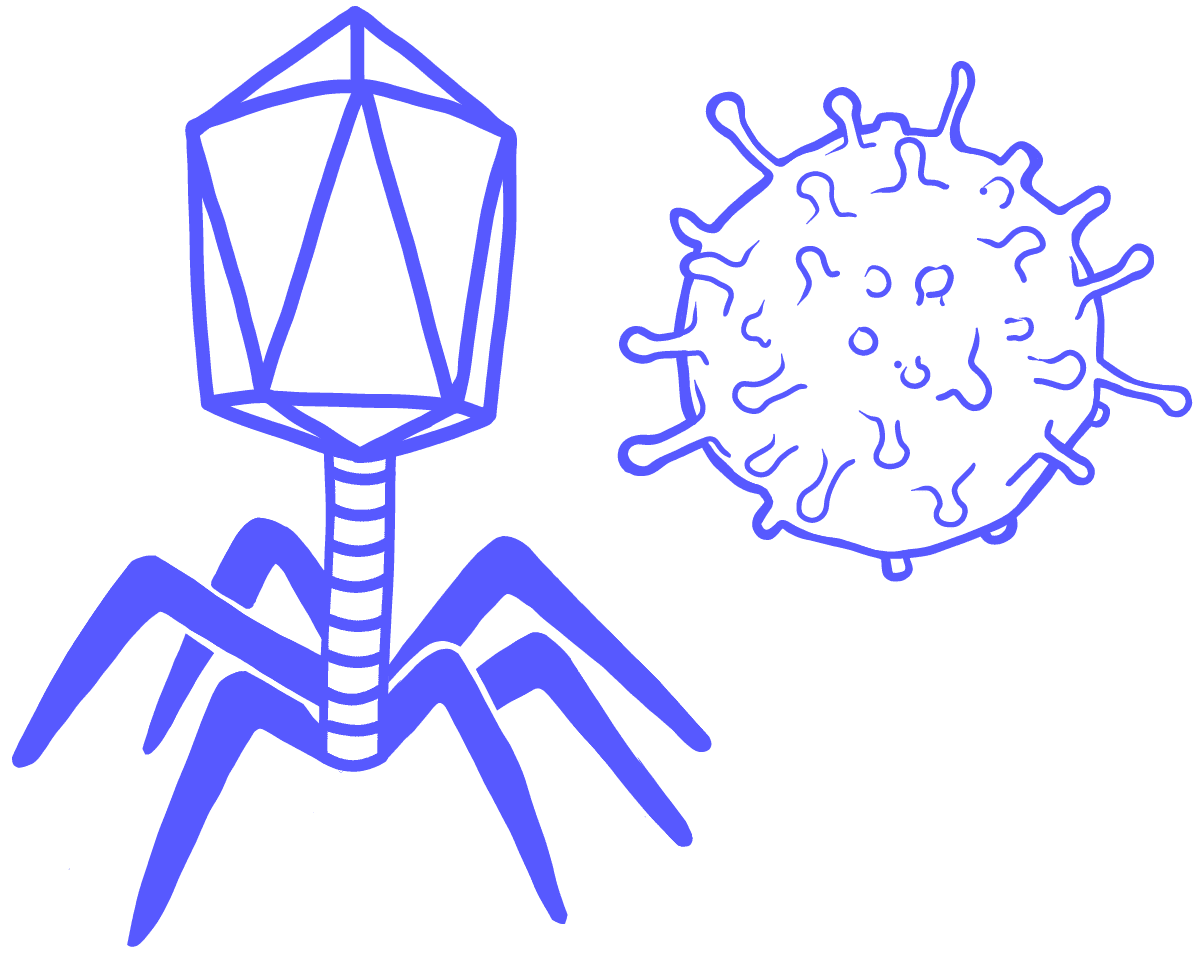 |
| Viruses |

Viruses = means = venom ( poisonous fluid ) = pasteur .
Acellular / non-cellular
Acellular / non-cellular
Recognizes causal organism of mosaic disease in tobacco
↳ D.J. Ivanowsky ( 1892 )
Viruses pass from bacteria proof filter i.e. viruses to be smaller then bacteria
Contagium vivum fluidum → M.W.Beijerinek (1898 )
↳ ( infectious poisonous fluid )
W.M.Stanley ( 1935 ) = crystallization = nucleoprotein
nucleo = nucleic acid (DNA or RNA ) both never present in viruses
protein = Capsomere sub unit
Capsomere = Caspid / protein coat
pathogenic → disease causing → plant & Animals
plant disease = (Plants Viruses SS RNA )
↪ Viruses that infect bacteria = Bacteriophage ds DNA
Viruses :↴
Mutation
submicroscopic
Host specific
Acellular / non-cellular organism
Inert crystalline structure outside living cell
Connecting link b/w living & non living cell
Hijack or overtake metabolism to it
Intracellular obligate parasite
protein = Capsomere sub unit
Capsomere = Caspid / protein coat
pathogenic → disease causing → plant & Animals
plant disease = (Plants Viruses SS RNA )
- Yellowing & vein clearing
- dwarfing & stunted growth
- mosaic formation
- Common cold
- AIDS
- SMALL POX
- MUMPS
- HERPS
- INFLUENZAE
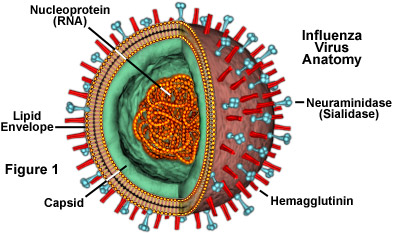 |
| INFLUENZAE |
Viruses :↴
Mutation
submicroscopic
Host specific
Acellular / non-cellular organism
Inert crystalline structure outside living cell
Connecting link b/w living & non living cell
Hijack or overtake metabolism to it
Intracellular obligate parasite
Structure of Virus

Size order ⇒ Bacteria > virus = prions > viroids
Comments
Post a Comment